Pump Station Design Fundamentals for Reliable Infrastructure
Pump stations are a critical component of municipal wastewater networks, industrial developments, and commercial infrastructure projects. When planned correctly from the start, pump stations provide reliable flow control, lower operating costs, and long service life. Poor early-stage design decisions often result in inefficiency, frequent maintenance, and premature equipment failure.
This article outlines the core pump station design basics that engineers and developers should consider during new infrastructure projects.
Why Pump Station Design Is Critical in New Developments
Pump stations must support both current demand and future growth. A properly designed station delivers:
- Consistent hydraulic performance
- Reduced risk of blockages and sediment build-up
- Lower energy consumption
- Longer pump and motor lifespan
- Easier access for maintenance and inspections
Robot Pumps South Africa supports new infrastructure projects with engineered pump systems designed for long-term efficiency and reliability.
Key Design Elements for New Pump Stations
Successful pump station design balances hydraulics, mechanical layout, and operational needs.
1. Hydraulic Planning
Early hydraulic calculations should define:
- Expected flow rates
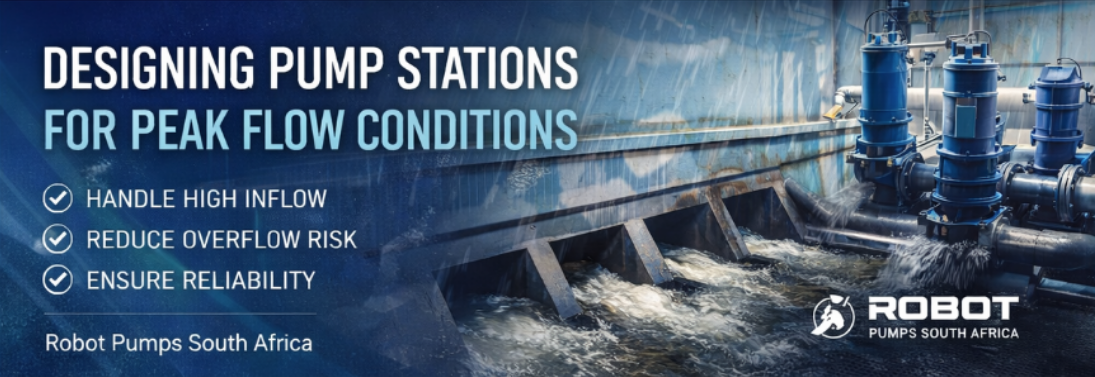
- Peak and minimum demand conditions
- Total dynamic head
- Solids content in wastewater
Accurate hydraulic data ensures pumps operate efficiently throughout their duty range.
2. Sump Design and Geometry
The sump plays a major role in flow stability. A well-designed sump:
- Minimises sediment accumulation
- Reduces turbulence and air entrainment
- Ensures even flow to all pumps
- Prevents vortex formation
Sloped floors and adequate depth help maintain steady inflow conditions.
3. Pump Layout and Positioning
Correct pump positioning ensures balanced suction and smooth operation. Poor layout can lead to:
- Cavitation
- Vibration
- Uneven pump loading
Balanced pump placement improves parallel pump operation and reduces mechanical stress.
4. Pipework and Discharge Design
Efficient pipework reduces energy losses and improves pump performance. Design considerations include:
- Avoiding sharp bends
- Selecting correct pipe diameters
- Installing reliable check and isolation valves
- Preventing discharge backflow
Designing for Maintenance and Access
Pump stations must allow safe and efficient maintenance. Design considerations should include:
- Adequate lifting points
- Clear access to pumps and valves
- Safe working space for technicians
Good access reduces downtime and improves safety during servicing.
Conclusion: Building Reliable Pump Stations from Day One
Strong pump station design is the foundation of long-term operational success. By focusing on hydraulics, sump design, pump layout, and access requirements, new infrastructure projects can avoid costly performance issues later.
Robot Pumps South Africa provides expert guidance and robust pump solutions to support efficient, future-ready pump station design.