Handling Solids in Wastewater Pumping Systems
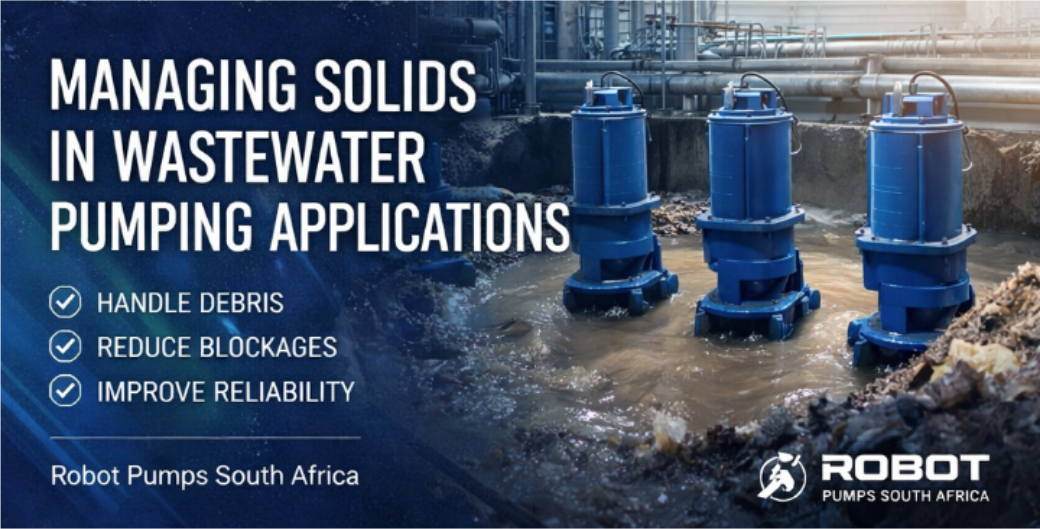
Wastewater systems often contain solids such as sludge, debris, and fibrous materials that can disrupt pump performance. Without the right equipment and design, these materials lead to blockages, reduced efficiency, and increased maintenance.
This article explores how to effectively manage solids in wastewater pumping applications through proper pump selection, system design, and operational practices.
Why Solids Management Is Important
Efficient solids handling ensures consistent system performance and prevents operational issues. Benefits include:
- Reduced pump blockages
- Improved flow consistency
- Lower maintenance costs
- Extended equipment lifespan
- Increased system reliability
Robot Pumps South Africa provides pumping solutions designed specifically for handling solids in demanding wastewater environments.
Common Challenges in Solids Handling
1. Blockages and Ragging
Materials such as wipes, plastics, and fibres can accumulate in pumps, causing blockages and reduced flow.
2. Sediment Build Up
Heavy solids settle in sumps and pipelines, restricting flow and increasing pump load.
3. Abrasive Wear
Sand and grit can cause rapid wear on impellers and internal components.
Pump Selection for Solids Handling
Choosing the correct pump is essential for effective solids management.
1. Vortex Impeller Pumps
Vortex impellers create a swirling flow that allows solids to pass without direct contact with the impeller. These are ideal for:
- High solids content
- Fragile or fibrous materials
- Reduced clogging risk
2. Channel Impeller Pumps
Channel impellers provide higher efficiency and are suitable for:
- Moderate solids levels
- Municipal wastewater systems
- Applications requiring strong flow performance
3. Cutter or Grinder Pumps
These pumps break down solids before pumping. They are suitable for:
- Fibrous materials
- Dense debris
- Challenging inflow conditions
System Design Considerations
Proper system design improves solids handling performance.
1. Sump Design
A well-designed sump:
- Prevents solids accumulation
- Maintains flow movement
- Reduces stagnation
2. Pipework Layout
Efficient pipe design helps keep solids moving. This includes:
- Avoiding low flow zones
- Maintaining correct flow velocity
- Minimising sharp bends
Maintenance for Solids Handling Systems
Routine maintenance is essential for long-term performance.
Key practices include:
- Regular cleaning of sumps
- Inspection of impellers
- Monitoring pump performance
- Removing debris build-up
Conclusion: Reliable Solids Handling Starts with the Right Approach
Managing solids effectively requires a combination of correct pump selection, smart system design, and regular maintenance. With the right approach, wastewater systems can operate efficiently with minimal disruption.
Robot Pumps South Africa offers durable pumps and expert guidance to help manage solids in wastewater systems effectively.