Understanding and Preventing Pump Cavitation
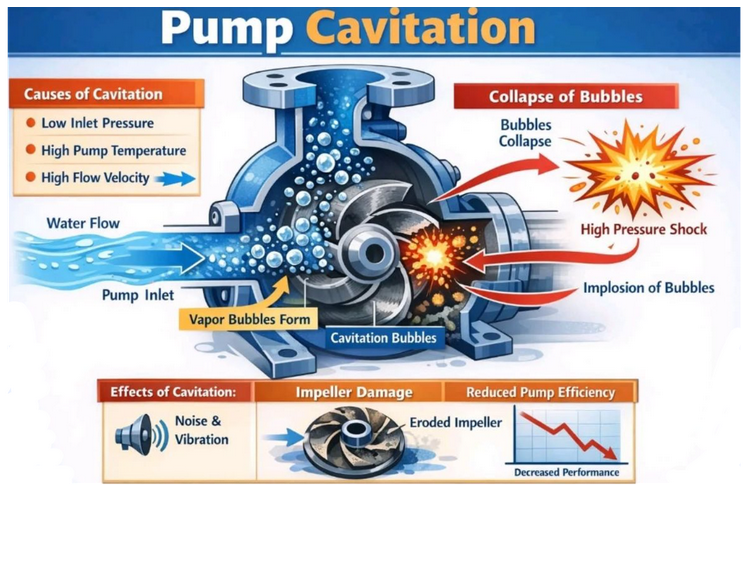
Pump cavitation is one of the most damaging and often misunderstood issues in wastewater pumping systems. It occurs when pressure drops cause vapour bubbles to form and collapse inside the pump, leading to noise, vibration, and long-term mechanical damage.
This article explains what causes pump cavitation, how it affects wastewater systems, and how it can be prevented through correct design and pump selection.
Why Cavitation Is a Serious Problem
Cavitation reduces pump efficiency and accelerates wear. If left unchecked, it can lead to complete pump failure. Common consequences include:
- Reduced flow and pressure
- Increased vibration and noise
- Damage to impellers and casings
- Premature seal and bearing failure
- Higher maintenance and energy costs
Robot Pumps South Africa supplies wastewater pumps designed to operate reliably under demanding hydraulic conditions.
Common Causes of Pump Cavitation
Cavitation is usually caused by poor system design or operating conditions rather than pump defects.
1. Inadequate Suction Conditions
Insufficient Net Positive Suction Head (NPSH) can occur due to:
- Low sump water levels
- Excessive suction lift
- Blocked or undersized suction piping
2. Poor Sump and Inlet Design
Sump turbulence, vortexing, and air entrainment reduce effective suction pressure and promote cavitation.
3. Incorrect Pump Selection
Pumps operating far from their Best Efficiency Point are more prone to cavitation, especially during variable flow conditions.
Design Strategies to Prevent Cavitation
1. Optimising Sump Design
A well-designed sump should:
- Maintain stable water levels
- Minimise turbulence
- Prevent air entrainment
- Ensure uniform flow to pumps
2. Correct Pump Sizing and Selection
Selecting pumps based on accurate hydraulic calculations ensures stable operation within safe pressure ranges.
3. Improving Suction Pipe Layout
Design improvements include:
- Short suction pipe lengths
- Smooth transitions
- Correct pipe diameters
- Avoiding sharp bends near pump inlets
Operational Best Practices
Maintaining correct operating conditions helps prevent cavitation. These include:
- Monitoring water levels
- Avoiding excessive start stop cycles
- Keeping suction screens clean
- Maintaining design flow rates
Conclusion: Protecting Pumps from Cavitation Damage
Pump cavitation causes serious damage if ignored, but it is fully preventable with correct system design and pump selection. By addressing suction conditions, sump hydraulics, and operational practices, wastewater systems can achieve reliable long-term performance.
Robot Pumps South Africa offers engineered pump solutions and expert guidance to help prevent cavitation and extend pump life.